How Self-Control Becomes Freedom: Simple Ifa-Inspired Practices That Work
You’ve probably heard self-control described like a cage: “Be good. Hold it in. Don’t do that.”
But Ifa (a wisdom tradition that focuses on alignment, character, and wise decision-making) frames self-control differently.
Self-control isn’t restriction. It’s real freedom.
Because when you have self-control, you have choices.
And when you have choices, you’re not being dragged around by moods, cravings, triggers, or other people’s behavior.
In this post, we’re talking about self-control with Ifa—without the heavy language—so you can actually use it in your everyday life: relationships, money, work, discipline, confidence… all of it.
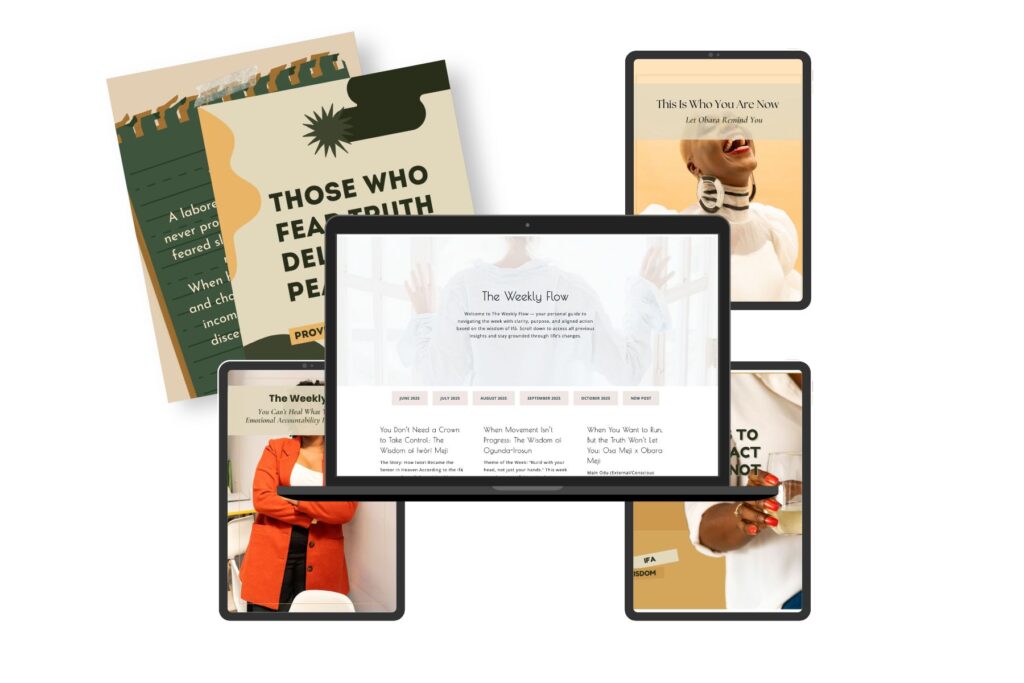
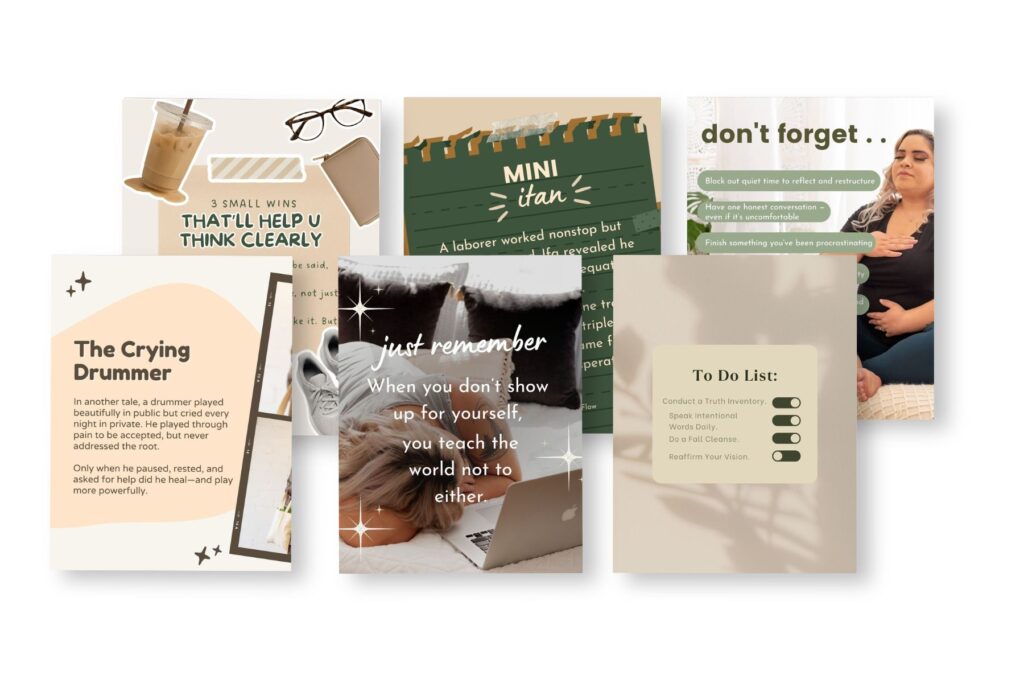
Heads Up! Before we dive in, check out the Mini Weekly Flow to get started.
I’ve bundled a weekly resource for the most important areas of your life: love/relationships, career/finances, mindset/self-awareness and more to make reaching your goals simple. To take control of your life and make things simple, you can start planning your week ahead when you signup for your free weekly mini-flow newsletter.
Self-Control Isn’t “Holding Back.” It’s Having Options.
Let’s make this plain:
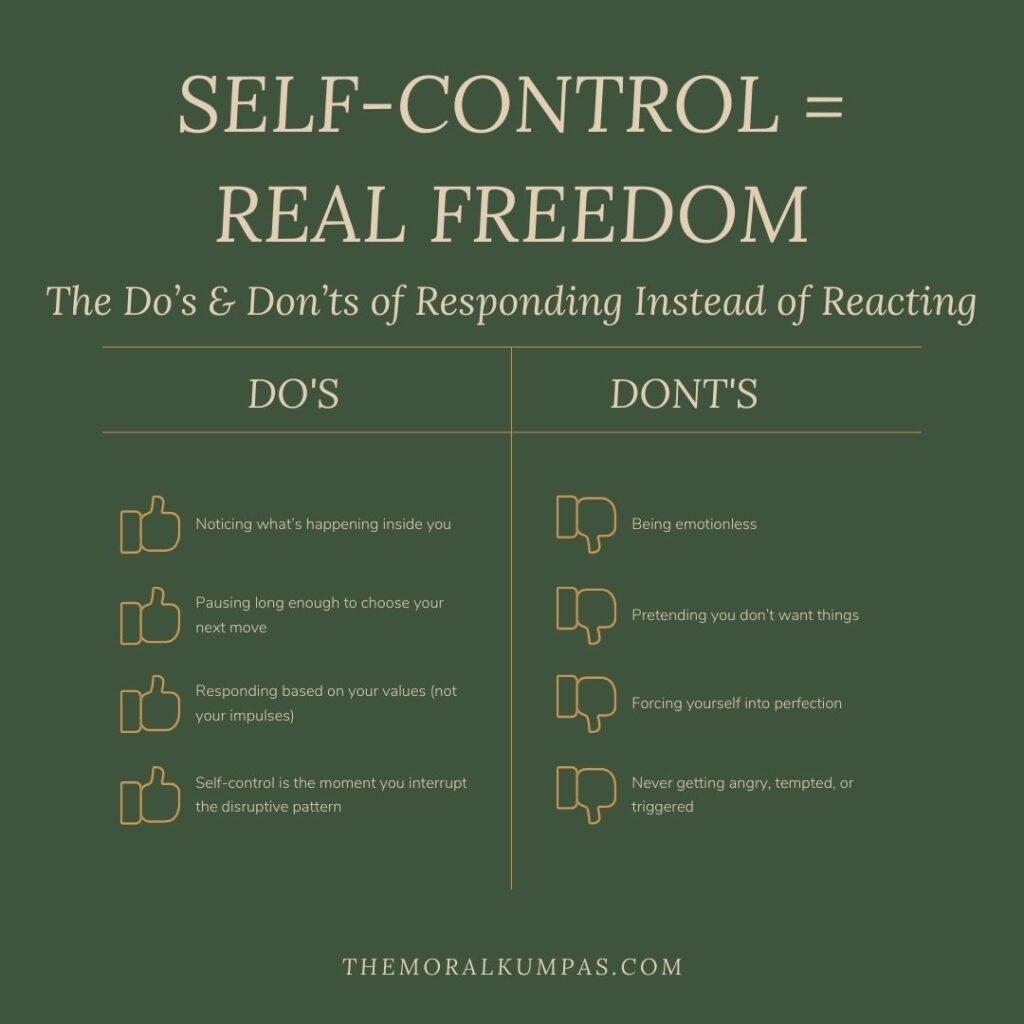
Self-control is not:
- being emotionless
- pretending you don’t want things
- forcing yourself into perfection
- never getting angry, tempted, or triggered
Self-control is:
- noticing what’s happening inside you
- pausing long enough to choose your next move
- responding based on your values (not your impulses)
That’s why it feels like freedom.
Because without self-control, you don’t decide.
You react.
And reacting can look like:
- snapping at someone you love
- overspending after a stressful day
- “one more scroll” turning into two hours
- breaking your own promises (again)
- saying yes when you mean no
- shutting down when you need to speak up
Self-control is the moment you interrupt the pattern and say:
“I’m not doing the automatic thing today.”
Why Reacting Steals Your Freedom
Here’s the sneaky part:
When you react automatically, you may feel “honest” or “real”…
…but you’re not always free.
Because your trigger is driving.
And triggers don’t care about:
- your goals
- your peace
- your reputation
- your finances
- your relationships
- your future self
So Ifa’s practical takeaway (in everyday terms) is this:
Freedom isn’t doing whatever you want. Freedom is being able to choose what you do.
Even when you’re upset.
Even when you’re tempted.
Even when you’re tired.
Even when someone pushes your buttons on purpose.
The Ifa Perspective (Without the Heavy Talk): “The Pause at the Crossroads”
One of the simplest “Ifa-inspired” ideas you can live by is the concept of the crossroads.
In normal language:
life constantly brings you moments where you can go left or right.
- react or respond
- numb out or face it
- spend or save
- lash out or speak calmly
- procrastinate or take one small step
Self-control is the skill of creating a pause at that crossroads.
Not a dramatic pause.
Not a 2-hour meditation.
Sometimes it’s literally 3 seconds.
But 3 seconds can save you:
- a text you can’t take back
- a purchase you regret
- an argument that ruins your night
- a spiral that steals your week
7 Ifa-Inspired Ways to Build Self-Control (That Actually Work)
These aren’t “motivational quotes.” These are tools.
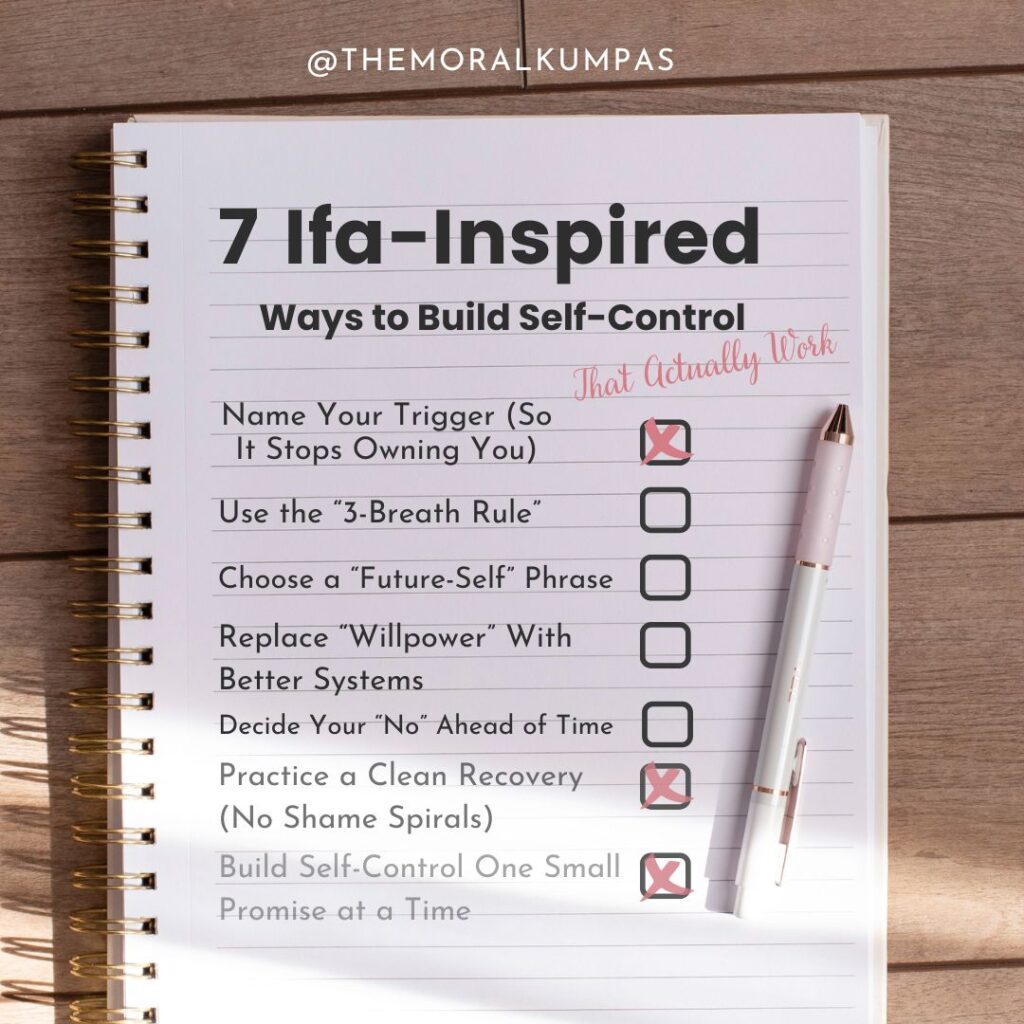
1) Name Your Trigger (So It Stops Owning You)
Self-control begins with awareness.
Ask yourself:
- What usually sets me off?
- What situations make me impulsive?
- What emotion do I avoid the most?
Common triggers:
- feeling disrespected
- feeling ignored
- feeling out of control
- feeling rushed
- feeling lonely
- feeling criticized
- feeling uncertain
Tiny practice:
When you feel activated, say (to yourself):
“This is a trigger, not an emergency.”
That one sentence brings your power back fast.
2) Use the “3-Breath Rule”
Before you respond, decide, buy, clap back, quit, or spiral:
Take 3 slow breaths.
Inhale. Exhale. Three times.
That’s it.
This is the pause at the crossroads in real life.
If you want it even simpler, try:
- Sip water before you speak
- Stand up before you respond
- Put your phone down for 10 seconds
Self-control doesn’t have to be complicated.
It just has to interrupt the automatic pattern.
3) Choose a “Future-Self” Phrase
In heated moments, we listen to the loudest voice in the room—usually the emotional one.
So give your future self a voice.
Pick one phrase and repeat it when tempted:
- “I don’t trade peace for a moment.”
- “I’m building a life I don’t need to escape from.”
- “I can want it and still wait.”
- “Not now doesn’t mean not ever.”
- “I can be upset and still be wise.”
This is a core part of self-control with Ifa: character is built in moments nobody applauds.
4) Replace “Willpower” With Better Systems
Willpower is a battery. Systems are a structure.
If you only rely on motivation, you’ll keep repeating cycles.
Try systems like:
- Keep your card at home when you’re working on spending
- Unfollow accounts that trigger comparison or cravings
- Put your gym clothes by the door
- Set a bedtime alarm (not just a wake-up alarm)
- Prep one “easy win” meal so you don’t default to chaos
Self-control isn’t only internal.
It’s also how you set up your environment.
5) Decide Your “No” Ahead of Time
A powerful discipline trick:
Decide your boundaries before you’re emotional.
Examples:
- “I don’t argue after 10pm.”
- “I don’t make big purchases when I’m stressed.”
- “I don’t respond when I’m heated—I wait 20 minutes.”
- “I don’t explain myself to people committed to misunderstanding me.”
When you decide ahead of time, you don’t have to “figure it out” in the moment.
That’s freedom.
6) Practice a Clean Recovery (No Shame Spirals)
If you mess up (because you’re human), the goal isn’t punishment.
The goal is repair.
Try this 3-step recovery:
- Own it: “That wasn’t aligned with who I’m becoming.”
- Learn it: “What was I feeling right before I did that?”
- Adjust it: “Next time I’ll pause / leave / breathe / wait.”
Shame says: “You’re hopeless.”
Self-control says: “You’re learning.”
7) Build Self-Control One Small Promise at a Time
Big change doesn’t start big.
Pick one small daily promise you can keep:
- 10 minutes of reading
- 1 glass of water before coffee
- 15-minute tidy
- no phone for the first 20 minutes of the day
- one saved dollar a day
- one “no” you mean
Kept promises build identity.
Identity builds discipline.
Discipline builds freedom.
A Simple 7-Day Self-Control Freedom Challenge
If you want to make this real this week, try this:
Day 1: Identify your top 2 triggers
Day 2: Use the 3-breath rule once
Day 3: Create one “decide ahead” boundary
Day 4: Remove one temptation from your environment
Day 5: Keep one small promise
Day 6: Practice a clean recovery (if you slip)
Day 7: Reflect: Where did I gain more choice?
Journal prompt:
“Where do I want more freedom in my life—and what reaction keeps stealing it?”
The Bottom Line: Self-Control Is the Power to Choose
Self-control doesn’t make you less free.
It makes you more free.
Because freedom isn’t the ability to do anything.
It’s the ability to do what’s wise even when it’s hard.
And that’s the kind of inner strength that can handle the outer world.
If you’re building discipline this month, keep it simple:
Pause. Choose. Repeat.
Keep the momentum going: check out more Habits & Flow posts for bite-sized practices that make consistency easier.
Now that you’ve got these strategies, it’s time to implement them to make life easier, to achieve your goals with a much clearer strategy without stressing and running in circles. Want a weekly step-by-step roadmap to your ideal lifestyle?
Grab my weekly flow membership.
I’m giving you a heads up and exact way to help you think better, move smarter, and live with more clarity, balance, and confidence every day. Ready to level up?